This is the opening to my essay on “Operation Raise the Colours”, published in the Observer on 7 September 2025. You can read the full version in the Observer.
About 10 years ago, we stayed in a cottage in Littondale, a beautiful valley in the Yorkshire Dales. The first night, we went for a drink at the local. It was plastered inside and out with Union Jacks. The moment I saw the flags, the hairs on my neck stood up.
Anyone black or Asian who had grown up in 70s and 80s Britain would probably have felt the same. The Union Jack in those days was a sign, meaning “enemy territory”. You found Union Jacks mainly on National Front marches and National Front pubs. “There ain’t no black in the Union Jack, send the fucking bastards back” was a common football terrace chant.
Littondale in the 2010s was, of course, a very different place from Manchester in the 1970s or east London in the 1980s. The meaning of the Union Jack has transformed, too. The pub was welcoming and friendly and we returned there more than once. It was symbol of how much Britain has changed over the past half century.
Signs and symbols are essential to our lives, helping us navigate the social world and providing a means of signifying who we are and what we stand for. The meaning of any symbol, though, is often contested. Someone wearing a Palestinian keffiyeh might view it as an act of solidarity with the people of Gaza; others might see it as an expression of Jew-hatred. A woman wearing a hijab might think of it as demonstrating her belongingness to her faith and culture. Others, including many Muslim women, regard it as a symbol of their oppression, a tawdry reminder of the second-class status women possess in many Muslim communities.
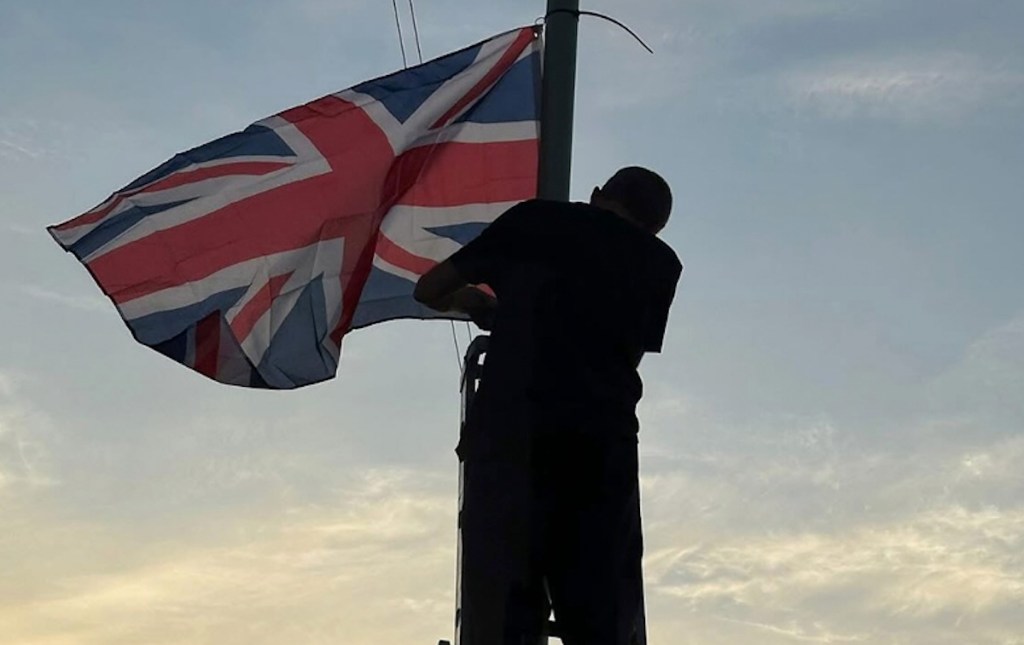
This contestation of meaning is why there has been such a fierce debate over Operation Raise the Colours, the movement to fly the national flag and to paint the cross of St George on walls and roundabouts that, since its beginnings in Birmingham, has spread across England, from Plymouth to Newcastle.
Read the full version of the essay in the Observer.
 Pandaemonium