
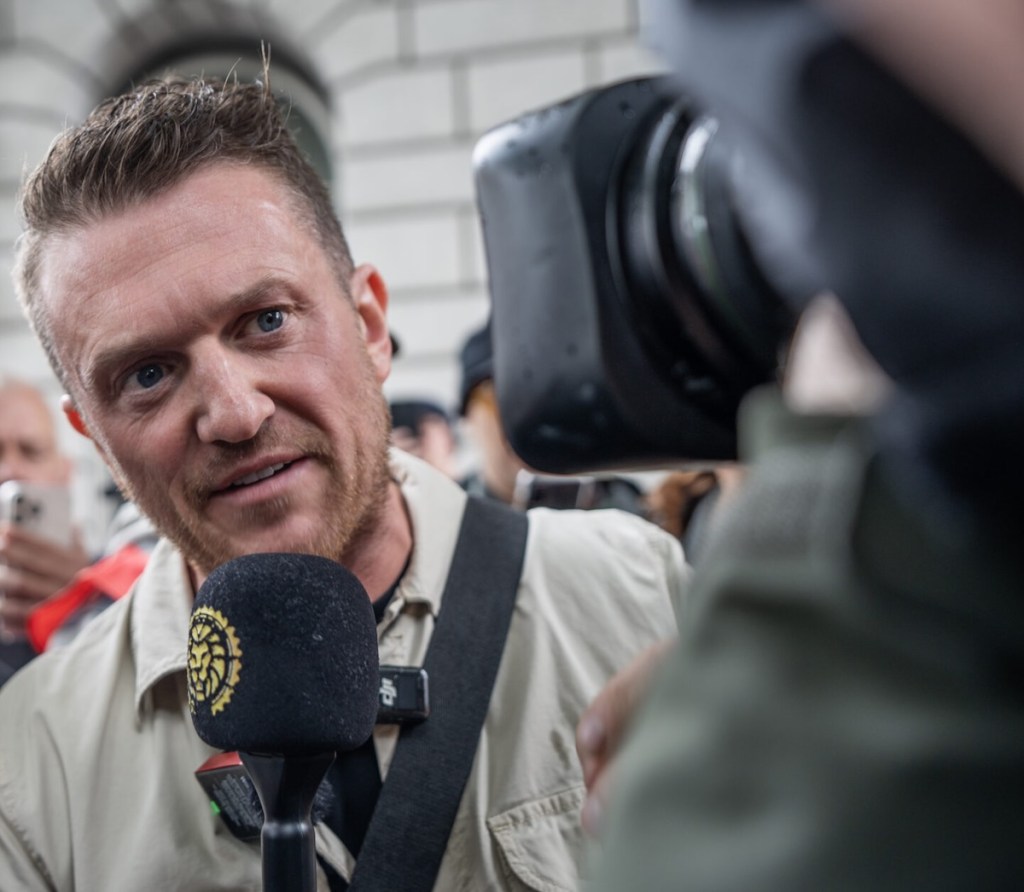
This is the opening to my essay on Tommy Robinson’s “Unite the Kingdom” rally, published in the Observer on 21 September 2025. You can read the full version in the Observer.
Mixenden lies at the edge of Halifax, West Yorkshire, a working-class town, very white and very poor. I went there more than 20 years ago, making a film for Channel 4 about multiculturalism. A British National Party candidate, Adrian Marsden, had just been elected as local councillor.
It was the kind of place that, growing up in the 1970s and 80s, in what was then a ferociously racist Britain, I might have seen as “enemy territory”; somewhere you walked around with the hairs standing up on the back of your neck, always expecting to get into a ruck with racists. But Mixenden never felt like that. I never felt threatened, even when wandering around by myself.
“What there was in Mixenden,” I wrote, “was a sense of being abandoned by mainstream politics and politicians, as a result of which some… had embraced the British National Party, seemingly as the only way of giving voice to their grievances. What set the estate apart was not the intensity of its racism but the depth of its resentment.”
Twenty years on, that sense of resentment and betrayal, of a broken social contract, has become the national story. Many of those on Tommy Robinson’s Unite the Kingdom march last week would have come from places like Mixenden.
A week on, the debate still rages over whether it was a “far right” event. The answer depends partly on which way one was looking.
Read the full version of the essay in the Observer.
 Pandaemonium